
Own your power.
How much money is your house leaving on the table?
A free, sourced report ranking the best upgrades for your house — solar, insulation, HVAC, battery, and the incentives you qualify for. About 2 minutes.
- Every number linked to its source
- Independent — providers can’t pay for ranking
- No spam, no account
- Built for NJ & TX homes
The stakes
$15,400
The average New Jersey home will spend about $15,400 on electricity over the next ten years — before any price increases.
Computed from the U.S. Energy Information Administration, Table 5.a — Residential average monthly bill by Census Division, and State, 2024 data (eia.gov): average monthly residential bill × 12 × 10 years, flat — no escalation applied.
Incentive programs are finite and change — Austin’s battery program is capped at 1,500 systems, and the federal residential solar credit already expired. The report shows what your home qualifies for today.
Cap: Austin Energy, 2026-03-24 (austinenergy.com). Federal credit: IRC §25D repealed for expenditures after 2025-12-31 — Congressional Research Service (congress.gov).
Some of that is recoverable. How much depends entirely on your house — your roof, your attic, your heating. That’s what the report computes.
See your numberHow it works
Three steps, and nobody calls you.
-
Enter your address We match it and pull the solar resource for your exact location.
-
Get a ranked plan Upgrades ordered for your house — and every number shows its source.
-
Connect only if you ask You choose whether to talk to a provider. Nothing happens until you do.
The evidence
Built on public data from U.S. EIA · NREL PVWatts · U.S. Census · RECS 2020 · PSE&G · Austin Energy
In Austin, our engine ranks solar last for a typical home. The city credits the power your panels export at 9.91¢/kWh while retail electricity runs around 16¢ — and a tool that’s paid to sell solar can’t tell you that. Ours isn’t, so it does.
Every number in your report shows its source. Anything we can’t compute honestly says “unknown” instead of guessing.
Providers pay a standard fee that never affects ranking. Your information goes nowhere unless you ask to be connected.
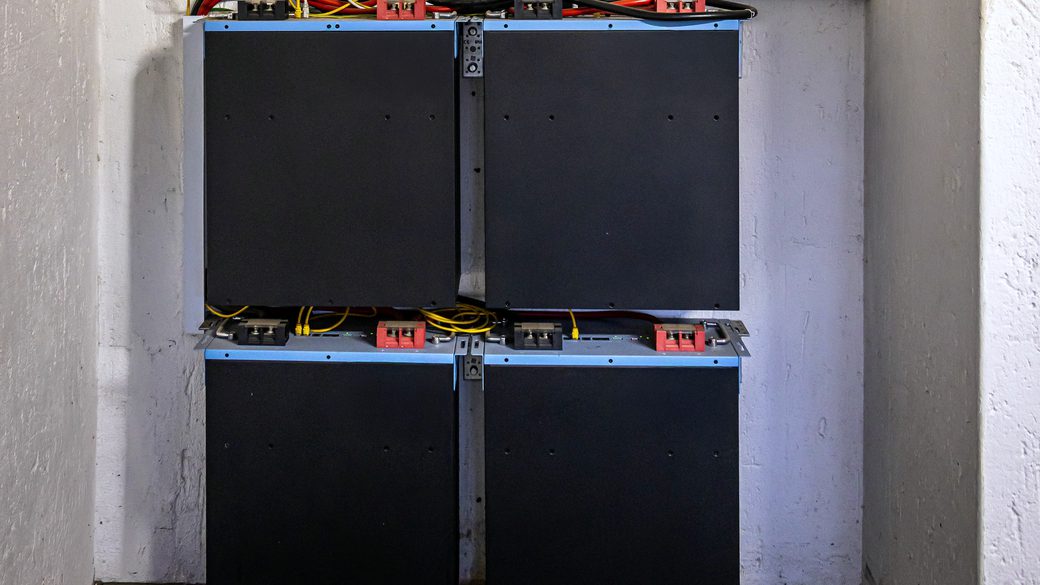
Already have solar or a battery?
Then we rank what you don’t have yet.
Tell us what you already own and we take it out of the recommendations instead of selling it to you twice.
- Existing solar comes out of the ranking, and what’s left is ordered for your house.
- A home battery is checked against what your utility publishes for your equipment — the conditions, in full, next to the figure.
- We show what your equipment qualifies for, and what it doesn’t.
Enrollment is with your utility directly — Vatra earns nothing from it.
Start with your address